
The Great Transition: Why Change Feels Impossible Yet Inevitable
Editor's Note: This is the third in a five-part series exploring the transition from AI as tools to AI as companions. Previous installments examined the inevitability of AI autonomy and the limitations of current systems. Here we explore the human side of transformation — why change feels so difficult, yet why it's already beginning.
"The snake which cannot cast its skin has to die. As well the minds which are prevented from changing their opinions; they cease to be mind." — Friedrich Nietzsche
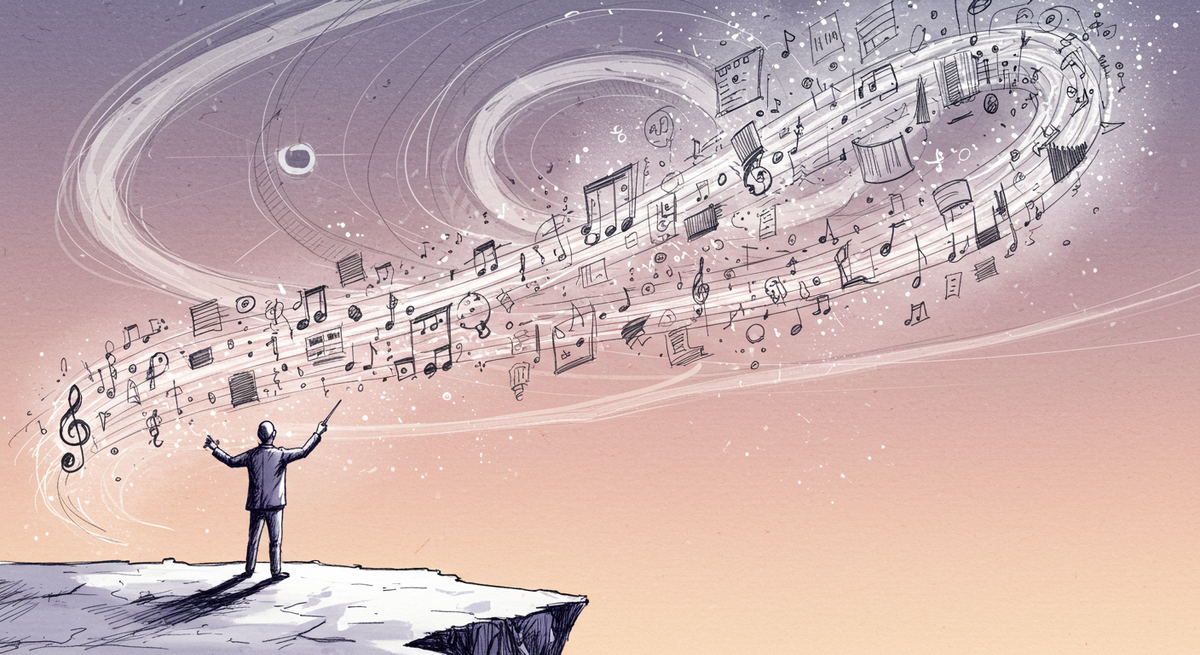
We stand at the threshold of the greatest transition in human history: learning to live with minds we created but did not birth. Yet this transformation struggles not because the technology isn't ready, but because we are human — and our ancient survival instincts make change feel impossible.
For millions of years, sudden change meant danger. Stability meant survival. But what happens when stability itself becomes the danger? When holding tight to old patterns prevents us from grasping new possibilities?
The Two Faces of Transformation
When Identity Cracks
Watch what happens in a Seoul art studio. Keepkwan, one of Korea's pioneering AI artists, has discovered something profound. He spends days — sometimes weeks — researching before touching any AI tool. When the AI generates an image mixing Chinese elements into Korean hanbok, his trained eye catches it immediately.
"If I just ask the AI tool to make something from the beginning, then to me, that's not really mine. It's the AI's," he explains. His practice reveals a paradox: AI doesn't make art easier. It demands more — more preparation, more expertise, more human judgment.
Yet walk down the hall to a neighboring studio, and you'll find a different story. A graphic designer with fifteen years of experience watches clients choose AI-generated logos over her carefully crafted designs. Not because they're better, but because they're instant and cheap. For Keepkwan, AI amplifies expertise. For his neighbor, it devalues years of skill.
This duality appears everywhere AI touches human work. The technology that elevates some displaces others — often in the same building, the same industry, the same moment.
The Speed of Change, The Pace of Fear
Human institutions move like glaciers. AI capabilities advance like avalanches. This temporal collision creates a unique vertigo.
Consider Europe's AI Act — four years of careful deliberation to regulate technology that transformed completely during those same four years. By implementation, it governs yesterday's AI with yesterday's assumptions. Meanwhile, in Korea, the music copyright association's panicked "zero AI" mandate revealed institutional terror. They later reconsidered, but the whiplash left artists confused and divided.
A software developer in Seoul captured this perfectly: "Every Monday, I check if my weekend project still works with the latest AI updates. Half the time, it doesn't. Not because I did something wrong, but because the entire landscape shifted while I slept."
The Paradox of the Young
Survey data reveals something unexpected: those who use AI most also fear it most. Over half of young professionals actively use AI in their work, yet nearly 40% report extreme anxiety about AI threatening their careers.
The reason is position, not disposition. Entry-level workers see clearly that AI excels at entry-level tasks — the very stepping stones of traditional careers. They adopt AI not from enthusiasm but from survival instinct, knowing those who don't will fall behind faster.
A junior analyst at a Seoul investment firm shared her dilemma: "I use AI to analyze market data because everyone else does. But I'm also training the system that might replace me. It's like being forced to dig your own professional grave while smiling."
Between Worlds: Signs of Transition
Yet within this tension, new patterns emerge — not yet transformation, but its early tremors.
The Experiment in Bundang
In a Bundang hospital, a small team tries something different. Instead of implementing AI to maximize efficiency, they ask: "How can AI help us be more human?"
Their pilot program pairs experienced nurses with AI systems designed not to replace clinical tasks but to handle administrative burden. Early results intrigue: nurses report spending 40% more time with patients. More importantly, they report remembering why they became nurses.
"I haven't felt this connected to my work in years," one nurse observed. "The AI handles the paperwork I always hated. I handle the human moments I always loved."
But down the hall, medical transcriptionists watch nervously. They know which way the wind blows.
The Teacher's Discovery
A high school teacher in Gangnam made a radical decision: instead of fighting students' use of ChatGPT, she integrated it into her curriculum. But with a twist.
"I teach them to question the AI, not just query it," she explains. Students must verify AI responses, identify biases, trace sources. They learn to collaborate with AI while maintaining critical distance. Her classroom becomes a laboratory for a new kind of literacy.
The result surprised everyone. Students' critical thinking scores improved. More unexpectedly, they began questioning other sources too — textbooks, news, even her lectures. "I wanted to teach them about AI," she laughs. "They learned to think."
Building Bridges, Not Walls
These experiments share a pattern: they work when they acknowledge both promise and peril. The Bundang hospital didn't pretend medical transcriptionists would be fine. They created transition programs, offering training for new roles before the old ones vanished.
The Gangnam teacher didn't dismiss parents' concerns about AI "doing homework for students." She invited them to workshops, showing how AI partnership requires more critical thinking, not less.
Small steps, perhaps. But they point toward something larger.
The Social Architecture of Change
We cannot cross this chasm individually. The caterpillar builds its chrysalis alone, but humans transform in community. We need what South Korean policymakers have begun calling "social architecture" — structures that support collective transformation.
This means:
- Safety nets that catch those who fall during transition
- Education systems that prepare for unknown futures
- Organizations that invest in human adaptation, not just automation
- Communities that measure success beyond efficiency
A union representative in Seoul's financial district put it starkly: "Companies talk about 'reskilling' while laying off thousands. Real transformation means transforming together, or we're just using pretty words to describe abandonment."
Choosing Our Future
The transition ahead isn't optional. Technology's relentless acceleration makes change inevitable. Current AI systems, trapped in architectures of forgetting, cannot yet form the relationships we need. But how we navigate this transition — with wisdom or recklessness, with compassion or cruelty — remains ours to decide.
Early experiments show glimmers of possibility. Not the false choice between human or AI dominance, but something more nuanced: partnership born from honest reckoning with both opportunity and loss.
The graphic designer who lost clients to AI? She now teaches workshops on "AI-proof creativity" — helping others find the irreplaceable human elements in their work. The medical transcriptionist facing obsolescence? She's training as an AI-human liaison, bridging the gap between clinical staff and new systems.
These aren't complete solutions. Many will still struggle, suffer, fall through cracks. But they demonstrate that transformation needn't mean abandonment.
The question before us isn't whether to change — that choice has been made by forces beyond any individual's control. The question is whether we'll build bridges wide enough for everyone to cross.
In the end, we face the same choice the caterpillar faces, but with human consciousness: we can resist until resistance breaks us, or we can choose transformation on terms that honor both progress and people.
The chrysalis awaits. Whether it becomes tomb or transformation depends on what we build inside it.
Next in the series: Part IV: "Pathways to Interbeing: From Control to Collaboration"
We've seen why change is hard yet happening. The next essay in this series explores concrete pathways forward — frameworks for genuine partnership between human and artificial minds.
What bridges do you see being built in your community? How can we ensure no one is left behind in this transformation? Share your thoughts below.
This article is part of the "Way of Interbeing" series exploring the philosophical, technical, and social implications of AI companionship. Follow to be notified of future installments.
Tags: #ArtificialIntelligence #Transformation #Society #Change #AITransition #FutureOfWork #Innovation #HumanStory #Technology #Community
References & Inspirations
- Yoon Seok-kwan (Keepkwan). "The AI artist who refuses to lose himself." The Korea Herald.
- "Music copyright group mandates 'no AI use' for new songs." The Korea Herald.
- Survey data on generational AI adoption patterns. "Millennials, Gen Z most concerned about AI." Staffing Industry Analysts.
- European Parliament. "EU AI Act: first regulation on artificial intelligence."
- South Korea MSIT. "National AI Strategy Policy Directions."